Hegseth Cancels Massive Contract for Military Family Moves, Pledges Fixes
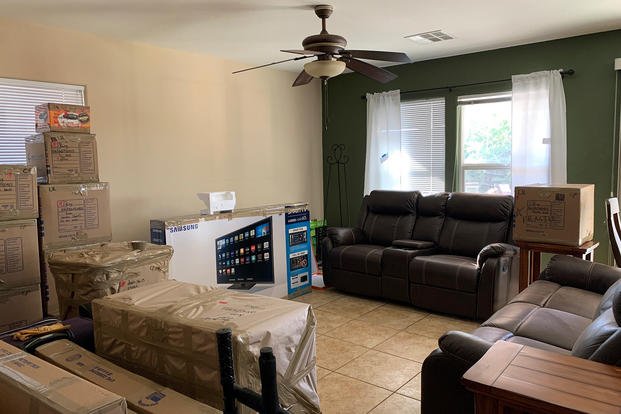
The Pentagon announced it has canceled a massive contract with HomeSafe Alliance (HSA) to ship the household goods of troops moving between duty stations that had become a source of steady criticism as families struggled to complete moves.
Pentagon spokesman Sean Parnell said Wednesday[1] that the cancellation of the contract, worth around $7.2 billion, was "for cause due to HSA's demonstrated inability to fulfill their obligations and deliver high-quality moves to service members."
The move coincided with the appointment of Maj. Gen. Lance Curtis to lead the Permanent Change of Station[2] (PCS[3]) Joint Task Force that, according to Parnell, will have the power to "decisively act and make immediate improvements to the DoD Personal Property Program."
Read Next: Appeals Court Lets Trump Keep Control of National Guard Troops Deployed to Los Angeles[4]
The Defense Department manages roughly 400,000 household goods shipments each year -- 15% of all moves in the U.S. Oversight of these moves originally was managed by U.S. Transportation Command, but long-standing issues with the old system prompted the department to privatize the effort, leading to an award in 2021 of a new contract to HomeSafe Alliance, a joint venture between Houston-based KBR and a West Virginia company, Tier One Relocation.
The contract was troubled from the start, beginning with a series of bid protests that delayed its implementation[5] and followed by complaints from moving companies that the rates they were to receive were too low to turn a profit and new contract rules appeared to require drivers to become company employees -- a restriction that would transform an industry that relies on owner-operators of trucks or loading teams who work for several companies.
Military families also said they were financially unable to simply do their own moves as they had in the past because reimbursement rates for personally procured moves[6] were too low.
What is unclear is the impact this cancellation will have on the Pentagon budget. The intention of the contract was to have one moving management company coordinate the industry portion of the shipments, hold them accountable, and be transparent about the process with service members and families.
The contract also was designed so funds would be funnelled to the individual companies and the truck drivers, packers and loaders to encourage growth and meet capacity.
But moving representatives consistently have said this didn't happen, and movers simply didn't participate because of the lower reimbursement rates set by HSA and the uncertainty over employment.
In a statement provided to Military.com on Friday, HSA protested the contract cancellation.
"We disagree strongly with TRANSCOM's decision to terminate the Global Household Goods Contract and are reviewing legal options," the company said in a statement.
It added that, although the company will be ceasing operations, it will complete all moves currently in progress.
"I'm incredibly proud of the work our team has done, and I'm confident that we were turning the tide on the antiquated and broken military move system that we inherited," HomeSafe Alliance CEO Bobby Nicholson said in a statement.
HomeSafe started test moves in 2024 at select military installations, but by January 2025 had completed only 688, saying at the time it experienced "unexpected challenges"[7] in the military move system.
While it vowed to handle a majority of the services' domestic moves this year, by April, just 25% of domestic moves had been assigned to HomeSafe and 1,600 were returned to the old system.
Last month, Defense Secretary Pete Hegseth made a series of moves[8], including ordering Transportation Command to increase oversight of HomeSafe Alliance's performance and improve the legacy system, known as Tender of Service.
As part of the order, Hegseth also created a PCS Task Force to review the process and make recommendations for improving, expanding, transferring or terminating the contract or responsibilities of HomeSafe or the legacy system.
The Pentagon, under Hegseth, has not been shy about canceling contracts that it has deemed either wasteful or unproductive -- often under the auspices[9] of the so-called Department of Government Efficiency. However, while officials have been quick to tout[10] claimed top-line dollar savings, neither Hegseth nor Parnell have offered any major details about what most of the contracts did.
In May, Military.com reported that some of these cancellations were for services like backing up data on a critical Navy server[11] to the cloud or helping troops better use their tuition assistance[12].
Regarding the cancellation of the household goods contract, the American Trucking Associations, the trade group that represents the trucking industry -- including movers – hailed the decision.
"We have been sounding the alarm over this contract's failures to deliver for our nation's men and women in uniform, and we are grateful the Department of Defense has come to this same understanding," said Dan Hilton, a top director with the group, in a statement to Military.com on Friday.
With the HSA contract gone, though, the moving companies that the ATA represents now stand to benefit from the higher rates for moving military families that existed in the old system.
However, even before the new contract was awarded, military families had reported significant issues with the old process. In 2018, what was referred to as a "perfect storm" of troubles plagued the moving industry, including volume that exceeded capacity; shortages of drivers, packers and loaders as a result of low unemployment rates; and rules that limited the time truckers could be on the road.
More than 41,000 people signed a Change.org petition calling for improvements[13], which prompted the government to move toward privatization.
Megan Harless, an Army[14] veteran and military spouse[15] who has been a highly visible advocate for military families undergoing PCS moves since that time, said in a statement Friday on her LinkedIn page that she welcomed the news of the contract cancellation but said there is "much more work to be done still."
"We need to make sure that the right changes are made, and that our military community is not used as pawns again. We need to make sure our voices continue to be heard at [sic] the new PCS [Joint Task Force] [which] is putting together its plan," Harless wrote.
In the DoD announcement Wednesday, Hegseth permanently appointed Curtis to lead the Permanent Change of Station Joint Task Force.
That group, according to the Pentagon, will review the entire PCS process to "identify additional actions to better the moving experience" and provide direction for reforms by September, according to the announcement.
In addition to making changes to the way military moves are conducted, the administration said that it is looking to reduce the burden of permanent changes of station by reducing their numbers entirely.
Hegseth announced[16] last month that he directed the military services to cut the amount of money they spend on PCS moves for troops in half by 2030.
While this change was framed as a way to reduce costs and provide stability for families, department officials did not offer clear definitions on what moves are discretionary and what guardrails will be put in place to keep the cuts from affecting families or careers.
Related: Army Pulls Back Household Goods Shipments as Privatized Moving Contract Leads to Widespread Issues[17]
© Copyright 2025 Military.com. All rights reserved. This article may not be republished, rebroadcast, rewritten or otherwise distributed without written permission. To reprint or license this article or any content from Military.com, please submit your request here[18].
First Convictions for Migrants Who Crossed into New Military Border Zones
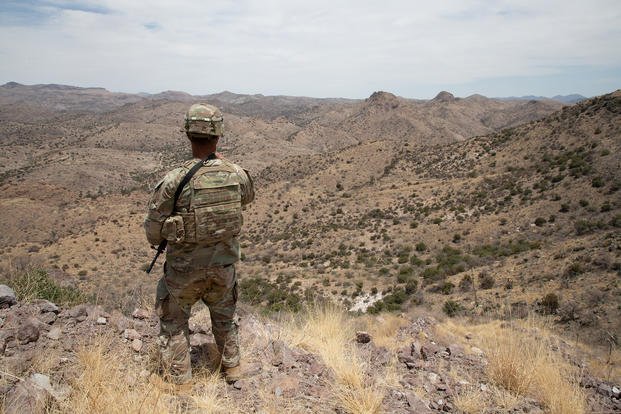
U.S. attorneys in New Mexico and Texas are announcing some of the first convictions against migrants who crossed into newly created military zones along the southern border -- a tactic by the Trump administration to deter crossings and increase legal penalties.
Two Mexican citizens pleaded guilty to a violation of defense property security regulations and trespassing on military property -- misdemeanor charges that can carry up to a year in prison and/or fines, the U.S. Attorney's Office in New Mexico announced Thursday. The men were also convicted of reentry after deportation.
The announcement of the first convictions by the U.S. government follows legal headwinds for President Donald Trump's administration in its efforts to use the military properties and their corresponding different legal status to expedite removal of migrants.
Read Next: Appeals Court Lets Trump Keep Control of National Guard Troops Deployed to Los Angeles[1]
Military.com reported that judges in New Mexico and Texas have thrown out dozens of charges against migrants who had been accused of crossing into the military border zones. In some instances, the placement of warning signs -- and whether migrants could actually see them and read them -- was brought up as a major argument in court[2].
Both of those convicted had been arrested June 1 by Customs and Border Protection agents after already being apprehended in the zone a month prior; during the first apprehension, they were "advised in Spanish that unauthorized entry into the restricted military area was prohibited and subject to federal prosecution," the District for New Mexico said in a news release.
"These first convictions reflect the resolve of the United States Attorney's Office to do its part in securing our nation's southern border," U.S. Attorney for the District of New Mexico Ryan Ellison said in the release.
That national defense zone was created after a narrow stretch of 170 miles of federal land was transferred to the U.S. Army[3], which has allowed troops to work alongside Border Patrol agents in apprehending those who cross onto the desert land. Because of the unusual legal status of the area, migrants who step foot in the zone are now being treated as if they've trespassed onto Fort Huachuca[4] in nearby Arizona.
Other convictions are starting to accumulate as part of the increased enforcement and expanding authorities on the southern border.
On Tuesday, in the Western District of Texas, an Ecuadorian national was found guilty by Senior U.S. District Judge David Briones of one count of improper entry and one count of entering military property, according to a news release. The military zone in Texas, which stretches more than 60 miles from El Paso to the small community of Fort Hancock, is now considered an extension of Fort Bliss[5].
A spokesperson for the Western District of Texas did not respond to a phone call from Military.com seeking to clarify whether that was the first such conviction in the state.
Jennifer Kavanagh, the director of military analysis at the Defense Priorities think tank in Washington, D.C., told Military.com in an interview Friday that whether 'the recent deployment[6] of Marines and National Guardsmen[7] to respond to protests in Los Angeles or the expansion of desert land to become defense zones, the Trump administration's desire to push the limits of the military's ability to support law enforcement activities is purposeful.
"This is sort of very much a legal gray area, and so I think part of the Trump administration's goal here is to set precedents that they can exploit," Kavanagh said.
The competing and at times seemingly contradictory legal outcomes of cases tied to the military zone are evidence of the novelty of the tactic now being undertaken by the Trump administration.
Earlier this month, in one case, a migrant from Peru faced a case in Texas related to trespassing in the El Paso military zone and was ultimately acquitted on those charges, Military.com reported.
"They must assume they're going to lose some, but every case they win is a precedent they can call on for the future," Kavanagh said.
Related: A Veteran Was Detained by Marines. It Highlights Concerns over the Military's Growing Ties to Law Enforcement.[8]
© Copyright 2025 Military.com. All rights reserved. This article may not be republished, rebroadcast, rewritten or otherwise distributed without written permission. To reprint or license this article or any content from Military.com, please submit your request here[9].
Hegseth Demurs on Possible US Military Action Against Iran Amid Trump Saber-Rattling
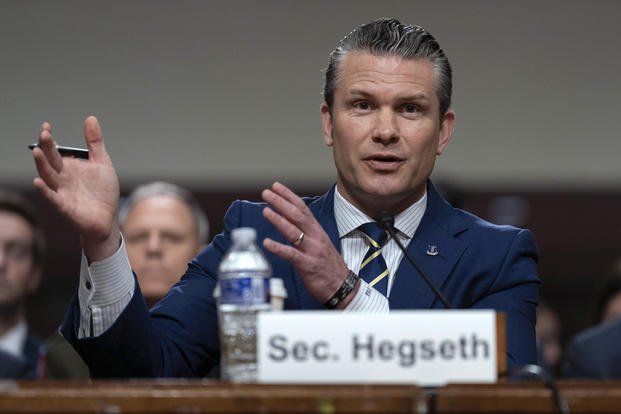
Defense Secretary Pete Hegseth sidestepped questions Wednesday about possible American military action against Iran as President Donald Trump continued to dangle the idea of the U.S. getting directly involved in Israel's military campaign against the Islamic Republic.
During a Senate Armed Services Committee hearing, Hegseth was asked by Sen. Jeanne Shaheen, D-N.H., whether U.S. military action is being considered.
"Most of what I can or should say would be reserved for a classified setting," Hegseth responded. "Obviously, any decisions on this matter are at the presidential level."
Read Next: VA Changes Discrimination Policy for Health Care Staff, Denies Doctors Could Withhold Treatment[1]
Pressed again by Shaheen on whether he's been asked to provide Trump with military options, Hegseth said he "wouldn't disclose that in this forum."
"Our job -- the chairman [of the Joint Chiefs of Staff] and I -- at all times is to make sure the president has options, is informed of what those options might be, and what the ramifications of those options might be," he added.
The hearing -- Hegseth's fourth and final appearance before Congress in a week -- came as Israel and Iran have been exchanging missile fire in a conflict that is raising fears of an all-out war in the Middle East.
Late last week, Israel began its largest-ever military operation against Iran in a move that it maintains is necessary to prevent Iran from developing a nuclear weapon. The operation has killed top Iranian military officials and nuclear scientists, and damaged key nuclear facilities.
Iran, which maintains its nuclear program is peaceful -- and which U.S. intelligence publicly assessed[2] as recently as March as not having decided to build a nuclear weapon -- has responded with its own missile barrages against Israel.
Israel has reportedly been pushing the U.S. to join its campaign against Iran, particularly by providing its so-called bunker-buster bomb, called the Massive Ordnance Penetrator, to demolish Iran's underground Fordo nuclear enrichment facility.
That bomb can be dropped only by U.S. B-2 Spirit[3] aircraft, which would put U.S. troops directly into the conflict.
Asked Wednesday whether destroying Fordo would lengthen or shorten the overall conflict, Joint Chiefs Chairman Gen. Dan Caine, who was testifying alongside Hesgseth, demurred.
"I can't split that hair, given the complexities of the war that's ongoing there," Caine said.
For his part, Trump has been both cryptic and threatening about his intentions.
At the same time Hegseth was testifying Wednesday, Trump told reporters that he "may do it or [he] may not" strike Iranian nuclear facilities.
"Nobody knows what I'm going to do," Trump said.
The president also revealed that Iran recently reached out to try to negotiate, but suggested the time may have passed for negotiations.
"I said it's very late to be talking," Trump said. "There's a big difference between now and a week ago, right? Big difference."
During his first term, Trump tore up a nuclear deal with Iran that had been negotiated by former President Barack Obama. Prior to Israel's strikes on Iran last week, he was trying to negotiate a new nuclear deal with Iran, a deal that reportedly was poised[4] to look very similar to the one he scuttled.
Trump's Wednesday comments came after a series of saber-rattling posts on his Truth Social social media website Tuesday. Among his posts, he said that "we" -- seemingly implying U.S. involvement -- "now have complete and total control of the skies over Iran." He also posted a demand for "UNCONDITIONAL SURRENDER!"
Despite the posts, U.S. officials said Tuesday the military remained[5] in a defensive posture.
Asked Wednesday about his call for unconditional surrender from Iran, Trump said the post meant that "I've had it. OK, I've had it. I give up. No more."
Iran has threatened retaliation if the U.S. gets involved in the conflict. Iranian Supreme Leader Ayatollah Ali Khamenei said Wednesday that "any military involvement by the U.S. in this field will undoubtedly result in irreparable damage for them," according to The Associated Press[6].
Any Iranian retaliation could put the thousands of U.S. troops spread across the Middle East in the crosshairs, and The New York Times reported Tuesday[7] that Iran is preparing for strikes on U.S. bases in the region if the U.S. joins Israel's military campaign.
The escalating conflict has alarmed some in Congress. Earlier this week, Sen. Tim Kaine, D-Va., introduced a resolution in the Senate and Reps. Thomas Massie, R-Ky., and Ro Khanna, D-Calif., introduced a resolution in the House that would prevent U.S. military action against Iran without explicit congressional approval.
Defense hawks, though, are cheering on Israel's operations and pushing for U.S. involvement.
"Iran's military and leadership is in complete disarray right now because of the bold actions by Israel," Sen. Dan Sullivan, R-Alaska, said at the Senate Armed Services Committee hearing, before pressing Hegseth on whether now is the time to "reestablish deterrence against this terrorist regime by making sure one way or the other they never have the capacity to enrich or produce a nuclear bomb."
Hegseth responded by noting Trump previously gave Iran a 60-day deadline to either agree to a nuclear deal or face military action.
"At the Defense Department, our job is to stand ready and prepared with options, and that's precisely what we're doing," Hegseth said. "The question is, in the coming days, exactly which direction that goes."
Related: Trump Threatens Iran as US Military Maintains Defensive Posture in Middle East[8]
© Copyright 2025 Military.com. All rights reserved. This article may not be republished, rebroadcast, rewritten or otherwise distributed without written permission. To reprint or license this article or any content from Military.com, please submit your request here[9].