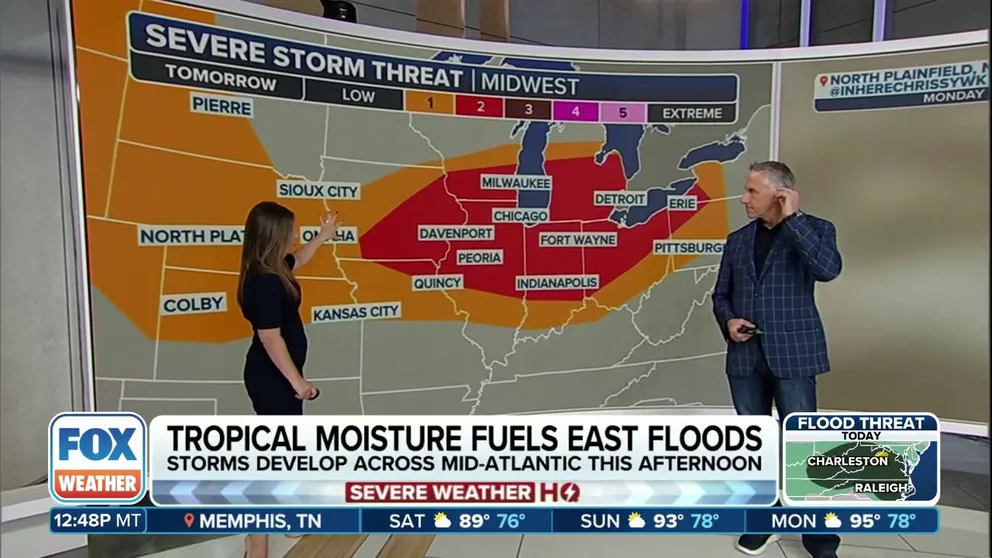
Rep. Andy Ogles, R-Tenn., is demanding an investigation into Belmont University after leaked recordings of a university faculty member admitting the school has maintained its diversity, equity and inclusion (DEI)
Ten Americans are returning to the U.S. after being released from custody in Venezuela, the Secretary of State[1] said on Friday.
"Thanks to President [Donald] Trump’s[2] leadership and commitment to the American
RUIDOSO, N.M.-- The power of the deadly flash floods[1] that raged through a New Mexico[2] town last week was on display as security cameras inside one local business captured the enormous damage on video.
Time stamps on time-lapse footage show it wasn't
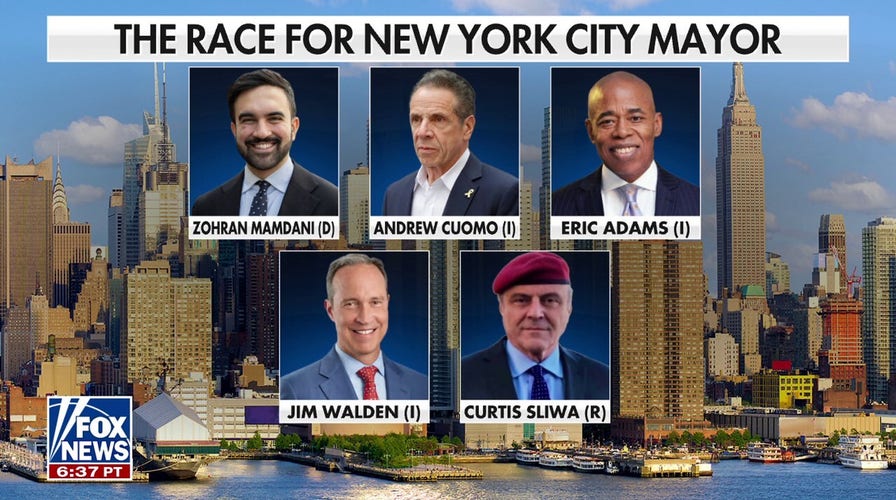
After meeting with leading New York City mayoral contender Zohran Mamdani[1], Minority Leader Rep. Hakeem Jeffries, D-N.Y., issued a lukewarm statement through a spokesperson about the meeting and did not endorse his
The U.S. Department of Agriculture[1] (USDA) said Friday it had fired dozens of foreign contract workers from China, Russia, North Korea and Iran.
The cuts of about 70 workers followed a national security[2] review
FIRST ON FOX: A $250 million fraud scheme that exploited a federally funded children's nutrition program during the COVID-19 pandemic[1] has been described by FBI Director Kash Patel as "one of the worst" in
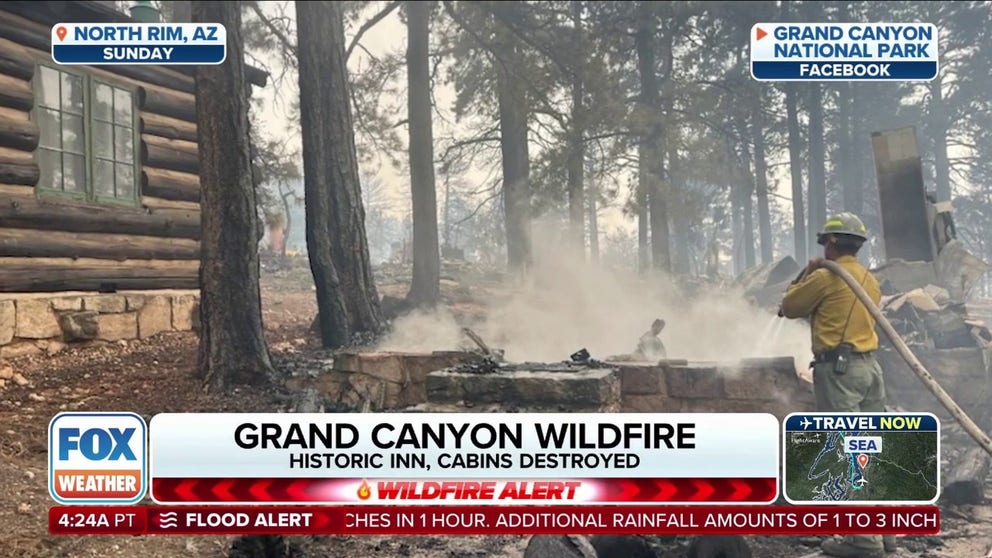
MONTROSE, Colo. – The South Rim Fire burning inside Colorado[1]'s Black Canyon of the Gunnison National Park[2] has destroyed several structures and areas throughout the park, officials announced on Friday.
The wildfire, which is 0% contained and has burned
FLAGSTAFF, Ariz. – Organizations in Arizona[1] and Utah saved over a dozen dogs from Central Texas, where a local shelter was overwhelmed by pups displaced by the deadly Fourth of July floods.
Concho Valley PAWS in San Angelo, Texas[2], received an influx
WASATCH COUNTY, Utah – Officers saved a woman last month who became trapped under a trestle bridge while paddleboarding on the Provo River in Utah[1].
Body camera video from a Utah Department of Natural Resources Law Enforcement[2] Ranger captured the
PORT ANGELES, Wash. – A small plane crash in Olympic National Park on Tuesday left one dead and two injured, according to the National Park Service[1].
The incident occurred just before 7 p.m.local time in the remote Quinault area of the Washington[2]
In the run-up to the vote in the U.S. Senate on President Donald Trump’s spending and tax bill[1], Republicans scrambled to revise the bill to win support of wavering GOP senators. A provision included in the original bill was a 10-year moratorium on
Back in high school chemistry, I remember waiting with my bench partner for crystals to form on our stick in the cup of blue solution. Other groups around us jumped with joy when their crystals formed, but my group just waited. When the bell rang,
Reviewer 1: “This manuscript is a timely and important contribution to the field, with clear methodology and compelling results. I recommend publication with only minor revisions.”
Reviewer 2: “This manuscript is deeply flawed. The authors’ conclusions
As Donald Trump takes office on January 20, concerns over ‘bond vigilantes’[1] in the United States have resurfaced
Like Bill Clinton before him, Trump now faces the prospect of ‘bond vigilantes’ – so-called because they punish
Reuters was first to report[1] that Meta has warned it may have to “roll back or pause” some features in India due to an antitrust directive which banned WhatsApp from sharing user data for advertising purposes. A non-public court filing seen
Reuters was two-and-a-half minutes ahead[1] of rivals on Eli Lilly’s unscheduled trading update, which showed fourth-quarter sales of its weight-loss drug Zepbound would miss Wall Street estimates. The drugmaker’s shares slumped 8% on
A new court filing Tuesday shed some light on an unusual wrinkle in the U.S. government’s fight with Harvard University.
Harvard previously claimed the U.S. Department of Defense had terminated a $3.4 million grant for important research into biological threats, despite pleas from an official to maintain the grant for national security purposes — but then asked for work to continue and paid the grant anyway[1].
A Defense Department official issued a court statement this week saying the grant — supporting research for the “AMPHORA” program[2], which stands for Assured Microbial Preservation in Harsh or Remote Areas — wasn’t canceled after all. That’s even though it was included in a list of terminated Harvard grants released in May.
Efstathia Fragogiannis is director of the contracts management office with the Defense Advanced Research Projects Agency ( DARPA) in the Department of Defense.
Fragogiannis wrote that in the days following a May 12 letter to Harvard announcing the cancellation of that grant and many others, DARPA officials sought and received an exemption for the grant for reasons of national security.
“On May 21, 2025, May 22, 2025, and June 27, 2025, DARPA informed Harvard via email that the agreement remains active and that it should continue to perform work on the AMPHORA project,” Fragogiannis wrote. “As such, Harvard has continued to perform work pursuant to that agreement, for which DARPA has paid, including the July 8, 2025, payment for work performed from May 1 to 31.”
Harvard had claimed the request for continued work and the payment it received were evidence that “reinforces” its court argument that “the government’s categorical terminations of research funding were arbitrary and capricious.”
In a filing released Tuesday, the government argued that “Harvard’s grants were ultimately terminated because of Harvard’s categorical refusal to respond to the Government’s concerns” over antisemitism.
A Harvard University spokesperson did not immediately respond to a request for comment.
The court filings come as part of an ongoing lawsuit[4] in which Harvard disputes cancellation of billions of dollars of funding by the U.S. government.
A retired Army[1] officer and conservative commentator who could not be approved for a Pentagon job during the first Trump administration because of past Islamaphobic and conspiratorial statements has been confirmed by the Senate to be the Pentagon's personnel chief in the second Trump administration.
In a 52-46 party-line vote Tuesday afternoon, the Senate confirmed Anthony Tata to become the under secretary of defense for personnel and readiness, the top official overseeing the health and well-being of the more than 3 million uniformed and civilian personnel working for the Defense Department.
Tata is a retired Army brigadier general whose post-military career includes serving as a school district administrator in Washington, D.C., and North Carolina and as North Carolina's secretary of transportation, a job he abruptly resigned from.
More recently, he has been a steady presence on Fox News as a political and military commentator.
Toward the end of the first Trump administration, in 2020, Tata was nominated to be under secretary of defense for policy, essentially the No. 3 position in the Pentagon. But his nomination was withdrawn after Republicans who led the Senate Armed Services Committee canceled his confirmation hearing amid mounting controversy over incendiary statements, including calling former President Barack Obama a "terrorist leader."
At his confirmation hearing in May[3] to become Pentagon personnel chief, Tata expressed regret for the comments that doomed his previous nomination and said they were "out of character."
But he also defended more recent comments that Democrats grilled him about. Those more recent statements include social media posts in which he said that all four-star officers appointed by former President Joe Biden should be fired and that the Posse Comitatus Act, the law that prohibits the military from conducting domestic law enforcement in most cases, should be "suspended."
Democrats argued that those statements, coupled with his past comments, are disqualifying.
"I respect and I appreciate his military service, but his record of public statements and behavior toward individuals with whom he disagrees politically is disqualifying for a position of this significance," Sen. Jack Reed, D-R.I., the ranking member of the Senate Armed Services Committee, said on the Senate floor Tuesday. "I am concerned Mr. Tata has a misguided and discriminatory view of the military and civilian workforces he would oversee."
At the hearing, Tata claimed that his reference to Posse Comitatus was meant to be a call for better border security and that he did "not know" whether the law should be suspended. Tata also maintained that his call to fire officers was about reinforcing the need to follow lawful orders regardless of politics and that he would not support a "blatant purge" of military officers.
While Republicans recoiled at Tata's comments the first time he was nominated, they dismissed his comments this time around.
"The thing I've learned about Tony is that he takes responsibility for his words and actions," Sen. Thom Tillis, R-N.C., said in May while introducing Tata at his confirmation hearing. "He learns from his past mistakes, which is a testament of a good leader."
MP Materials, which runs the only American rare earths mine[1], announced a new $500 million agreement with tech giant Apple on Tuesday to produce more of the powerful magnets used in iPhones as well as other high-tech products like electric vehicles.
This news comes on the heels of last week’s announcement that the U.S. Defense Department agreed to invest $400 million in shares of the Las Vegas-based company. That will make the government the largest shareholder in MP Materials and help increase magnet production.
Despite their name, the 17 rare earth elements aren’t actually rare, but it’s hard to find them in a high enough concentration to make a mine worth the investment.
They are important ingredients in everything from smartphones and submarines to EVs and fighter jets, and it's those military applications that have made rare earths a key concern in ongoing U.S. trade talks[2]. That's because China dominates the market and imposed new limits on exports after President Donald Trump announced his widespread tariffs[3]. When shipments dried up, the two sides sat down in London.
The agreement with Apple will allow MP Materials to further expand its new factory in Texas to use recycled materials to produce the magnets that make iPhones vibrate. The company expects to start producing magnets for GM's electric vehicles later this year and this agreement will let it start producing magnets for Apple in 2027.
The Apple agreement represents a sliver of the company's pledge to invest $500 billion domestically[4] during the Trump administration. And although the deal will provide a significant boost for MP Materials, the agreement with the Defense Department may be even more meaningful.
Neha Mukherjee, a rare earths analyst with Benchmark Mineral Intelligence, said in a research note that the Pentagon's 10-year promise to guarantee a minimum price for the key elements of neodymium and praseodymium will guarantee stable revenue for MP Minerals and protect it from potential price cuts by Chinese producers that are subsidized by their government.
“This is the kind of long-term commitment needed to reshape global rare earth supply chains," Mukherjee said.
Trump has made it a priority to try to reduce American reliance on China for rare earths. His administration is both helping MP Materials and trying to encourage the development of new mines that would take years to come to fruition. China has agreed to issue some permits[5] for rare earth exports but not for military uses, and much uncertainty remains about their supply. The fear is that the trade war between the world’s two biggest economies could lead to a critical shortage of rare earth elements that could disrupt production of a variety of products. MP Materials can't satisfy all of the U.S. demand from its Mountain Pass mine in California’s Mojave Desert.
The deals by MP Materials come as Beijing and Washington have agreed to walk back on their non-tariff measures: China is to grant export permits for rare earth magnets to the U.S., and the U.S. is easing export controls on chip design software and jet engines. The truce is intended to ease tensions and prevent any catastrophic fall-off in bilateral relations, but is unlikely to address fundamental differences as both governments take steps to reduce dependency on each other.
___
Associated Press writers David Klepper and Didi Tang in Washington and Michael Liedtke in San Francisco contributed.
Happy New Music Friday! The weekend is here, which means more streaming, new playlists and the best that music has to offer -- and ET has you covered for everything in between.
Lady Gaga kicked off her highly anticipated The MAYHEM Ball Tour in Las Vegas
Dance like no one's watching — because they aren't! Professional dancer Katia Pryce has taught Kate Hudson[1], Kelly Ripa[2], Madonna[3], Molly Sims[4], and more celebs her signature training technique, and regardless of your star status — or athletic
Rep. Andy Ogles, R-Tenn., is demanding an investigation into Belmont University after leaked recordings of a university faculty member admitting the school has maintained its diversity, equity and inclusion (DEI)
Ten Americans are returning to the U.S. after being released from custody in Venezuela, the Secretary of State[1] said on Friday.
"Thanks to President [Donald] Trump’s[2] leadership and commitment to the American
After meeting with leading New York City mayoral contender Zohran Mamdani[1], Minority Leader Rep. Hakeem Jeffries, D-N.Y., issued a lukewarm statement through a spokesperson about the meeting and did not endorse his
Mike returned home to Philadelphia after a 15-year prison sentence and suffered an emotional breakdown.
“I just couldn’t stop crying … I don’t know. It was the anxiety. It was just a lot,” he said. “I was under a lot of pressure and it just came crashing down.”
Mike, who was in his late 40s when we spoke, told me about his childhood filled with abuse, his first arrest at age 14, and the over 20 years of...
PORTRUSH, Northern Ireland -- Ireland's Shane Lowry[1] was assessed a two-stroke penalty following his second round at the Open Championship on Friday after the broadcast video feed appeared to show his ball moving slightly when he took a practice...
INDIANAPOLIS -- The day after talking with commissioner Cathy Engelbert and ownership representatives, WNBA players here for All-Star weekend characterized the meeting as a "missed opportunity." But they also expressed hope for more constructive...
Golden oyster mushrooms[1], with their sunny yellow caps and nutty flavor, have become wildly popular for being healthy, delicious and easy to grow at home from mushroom kits.
If you happen to find yourself in the Southern Hemisphere with binoculars and a good view of the night sky on a dark and clear summer night, you might just be able to spot the Sculptor galaxy[1]. And if your eyes were prisms that could separate light into the thousands of colors making it up, then congratulations: After hours of...
"You shall not covet your neighbor's house. You shall not covet your neighbor's wife, or his manservant or maidservant, his ox or donkey, or anything that belongs to your neighbor." Exodus 20:1-17.
That is, just look at your own piece of the pie, not the other fellow’s. You will look at what you have, not what someone else has. You will not act upon a desire for something that belongs to someone else. What's your is yours, what's theirs is theirs. You will focus on your property, not their property. It is not about them and what they have; it is about you, your journey toward God, and what you have along the way.
Why would God require this?
Implementing this commandment yields a certain kind of social structure. Not following it creates another. And the social structure in which people grow up and live their lives affects how people are trained up for God.
RUIDOSO, N.M.-- The power of the deadly flash floods[1] that raged through a New Mexico[2] town last week was on display as security cameras inside one local business captured the enormous damage on video.
Time stamps on time-lapse footage show it wasn't
MONTROSE, Colo. – The South Rim Fire burning inside Colorado[1]'s Black Canyon of the Gunnison National Park[2] has destroyed several structures and areas throughout the park, officials announced on Friday.
The wildfire, which is 0% contained and has burned
Ibtissam Jraidi's double helps the Atlas Lionesses to a 3-1 win, setting up a last-four meeting against either Algeria or Ghana at the Women's Africa Cup of Nations.
Last Wednesday was marked by the invasion of Sport's training center with an assault.On Thursday, members of a Vasco fan group spoke with the team with the club's permission.This Friday (18th) saw ano...










 Protect the skin you’re in! Celebrity facialist
  Dance like no one's watching — because they aren't! Professional dancer Katia Pryce has taught