A newly analyzed set of climate data points to a major volcanic eruption that may have played a key role in the Black Death’s arrival. Cooling and crop failures across Europe pushed Italian states to bring in grain from the Black Sea. Those shipments may have carried plague-infected fleas. The study ties together tree rings, ice cores, and historical writings to reframe how the pandemic began.
FULL STORY
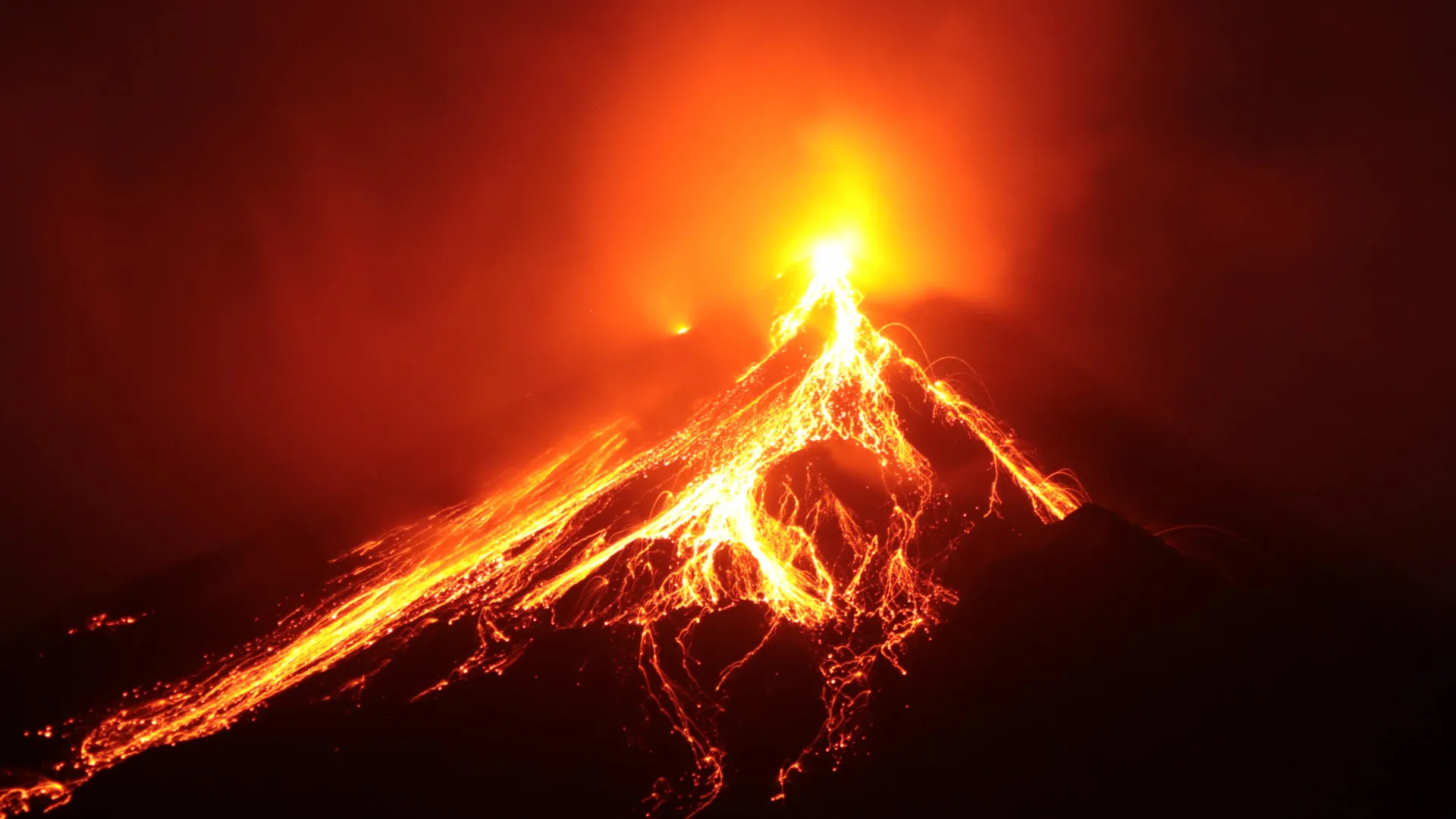
A mysterious volcanic eruption may have helped unleash the Black Death by fueling famine and contaminating grain shipments. Credit: Shutterstock
A study published in the scientific journal Communications Earth & Environment proposes that volcanic activity may have contributed to the rapid movement of the Black Death across medieval Europe. According to the researchers, cooling associated with this eruption triggered a period of famine. In response, Italian city states began bringing in grain from the Black Sea region, and those shipments may have carried the plague bacterium, Yersinia pestis.
The Black Death moved across Europe from 1347 to 1353 CE, with mortality rates reaching as high as 60% in some areas. Although its impact is well documented, the precise reasons for when and how the pandemic began remain unclear.
Climate Records Reveal Signs of a Major Eruption
To explore these questions, Martin Bauch and Ulf Büntgen evaluated earlier research on tree ring growth from eight regions in Europe, measurements of volcanic sulfur preserved in Antarctic and Greenland ice cores, and written reports from the fourteenth century. Together, these records point to a significant volcanic eruption somewhere in the tropics around 1345 CE. The eruption appears to have increased atmospheric sulfur and ash, which contributed to colder and wetter conditions across southern Europe and the Mediterranean.
Historical accounts describe widespread crop failures and famine during this period in Spain, southern France, northern and central Italy, Egypt, and the Levant. These hardships prompted Italian maritime powers -- such as Venice and Genoa -- to negotiate a ceasefire in a conflict with the Mongols of the Golden Horde so they could secure grain shipments from the Black Sea region around 1347 CE.
Grain Imports and the Possible Spread of Plague
Venetian sources state that these imports helped prevent mass starvation. However, the timing of arriving grain ships and the first plague outbreaks in cities that received them raises another possibility. Fleas carrying Yersinia pestis may have traveled with the grain. As the shipments were moved to additional cities, including Padua, these fleas could have helped accelerate the spread of the Black Death throughout Europe.
The authors conclude that this combination of climatic disruption, famine, and grain transport offers a plausible explanation for how the Black Death began and spread across Europe.
Story Source:
Materials provided by Springer Nature. Note: Content may be edited for style and length.
Journal Reference:
Martin Bauch, Ulf Büntgen. Climate-driven changes in Mediterranean grain trade mitigated famine but introduced the Black Death to medieval Europe. Communications Earth, 2025; 6 (1) DOI: 10.1038/s43247-025-02964-0[1]
Cite This Page:
Springer Nature. "Scientists uncover a volcanic trigger behind the Black Death." ScienceDaily. ScienceDaily, 8 December 2025. <www.sciencedaily.com/releases/2025/12/251208014623.htm>.
Springer Nature. (2025, December 8). Scientists uncover a volcanic trigger behind the Black Death. ScienceDaily. Retrieved December 8, 2025 from www.sciencedaily.com/releases/2025/12/251208014623.htm
Springer Nature. "Scientists uncover a volcanic trigger behind the Black Death." ScienceDaily. www.sciencedaily.com/releases/2025/12/251208014623.htm (accessed December 8, 2025).
May 1, 2025 — A new study has investigated the use of a new monitoring technique for early warning of a volcanic eruption. The research team compared the earthquake signals during two eruptions of Ontake Volcano ...
July 10, 2024 — Ancient DNA from bones and teeth hints at a role of the plague in Stone Age population collapse. Contrary to previous beliefs, the plague may have diminished Europe's populations long before the ...
Mar. 10, 2022 — Over the past two decades, the Arctic has lost about one-third of its winter sea ice volume, largely due to a decline in sea ice that persists over several years, called multiyear ice, according to a ...
Feb. 14, 2022 — Scientists have used genetic testing of ivory shipments seized by law enforcement to uncover the international criminal networks behind ivory trafficking out of Africa. The genetic connections across ...
June 22, 2021 — A team has reviewed the literature on the internal and external mechanisms that lead to a volcanic eruption. Analyzing the thermo-mechanics of deep volcanic processes and magma propagation to the ...
Apr. 7, 2021 — The properties of the magma inside a volcano affect how an eruption will play out. In particular, the viscosity of this molten rock is a major factor in influencing how hazardous an eruption could be ...
A newly analyzed set of climate data points to a major volcanic eruption that may have played a key role in the Black Death’s arrival. Cooling and crop failures across Europe pushed Italian states to bring in grain from the Black Sea. Those shipments may have carried plague-infected fleas. The study ties together tree rings, ice cores, and historical writings to reframe how the pandemic began.
FULL STORY
A mysterious volcanic eruption may have helped unleash the Black Death by fueling famine and contaminating grain shipments. Credit: Shutterstock
A study published in the scientific journal Communications Earth & Environment proposes that volcanic activity may have contributed to the rapid movement of the Black Death across medieval Europe. According to the researchers, cooling associated with this eruption triggered a period of famine. In response, Italian city states began bringing in grain from the Black Sea region, and those shipments may have carried the plague bacterium, Yersinia pestis.
The Black Death moved across Europe from 1347 to 1353 CE, with mortality rates reaching as high as 60% in some areas. Although its impact is well documented, the precise reasons for when and how the pandemic began remain unclear.
Climate Records Reveal Signs of a Major Eruption
To explore these questions, Martin Bauch and Ulf Büntgen evaluated earlier research on tree ring growth from eight regions in Europe, measurements of volcanic sulfur preserved in Antarctic and Greenland ice cores, and written reports from the fourteenth century. Together, these records point to a significant volcanic eruption somewhere in the tropics around 1345 CE. The eruption appears to have increased atmospheric sulfur and ash, which contributed to colder and wetter conditions across southern Europe and the Mediterranean.
Historical accounts describe widespread crop failures and famine during this period in Spain, southern France, northern and central Italy, Egypt, and the Levant. These hardships prompted Italian maritime powers -- such as Venice and Genoa -- to negotiate a ceasefire in a conflict with the Mongols of the Golden Horde so they could secure grain shipments from the Black Sea region around 1347 CE.
Grain Imports and the Possible Spread of Plague
Venetian sources state that these imports helped prevent mass starvation. However, the timing of arriving grain ships and the first plague outbreaks in cities that received them raises another possibility. Fleas carrying Yersinia pestis may have traveled with the grain. As the shipments were moved to additional cities, including Padua, these fleas could have helped accelerate the spread of the Black Death throughout Europe.
The authors conclude that this combination of climatic disruption, famine, and grain transport offers a plausible explanation for how the Black Death began and spread across Europe.
Story Source:
Materials provided by Springer Nature. Note: Content may be edited for style and length.
Journal Reference:
Martin Bauch, Ulf Büntgen. Climate-driven changes in Mediterranean grain trade mitigated famine but introduced the Black Death to medieval Europe. Communications Earth, 2025; 6 (1) DOI: 10.1038/s43247-025-02964-0[1]
Cite This Page:
Springer Nature. "Scientists uncover a volcanic trigger behind the Black Death." ScienceDaily. ScienceDaily, 8 December 2025. <www.sciencedaily.com/releases/2025/12/251208014623.htm>.
Springer Nature. (2025, December 8). Scientists uncover a volcanic trigger behind the Black Death. ScienceDaily. Retrieved December 8, 2025 from www.sciencedaily.com/releases/2025/12/251208014623.htm
Springer Nature. "Scientists uncover a volcanic trigger behind the Black Death." ScienceDaily. www.sciencedaily.com/releases/2025/12/251208014623.htm (accessed December 8, 2025).
May 1, 2025 — A new study has investigated the use of a new monitoring technique for early warning of a volcanic eruption. The research team compared the earthquake signals during two eruptions of Ontake Volcano ...
July 10, 2024 — Ancient DNA from bones and teeth hints at a role of the plague in Stone Age population collapse. Contrary to previous beliefs, the plague may have diminished Europe's populations long before the ...
Mar. 10, 2022 — Over the past two decades, the Arctic has lost about one-third of its winter sea ice volume, largely due to a decline in sea ice that persists over several years, called multiyear ice, according to a ...
Feb. 14, 2022 — Scientists have used genetic testing of ivory shipments seized by law enforcement to uncover the international criminal networks behind ivory trafficking out of Africa. The genetic connections across ...
June 22, 2021 — A team has reviewed the literature on the internal and external mechanisms that lead to a volcanic eruption. Analyzing the thermo-mechanics of deep volcanic processes and magma propagation to the ...
Apr. 7, 2021 — The properties of the magma inside a volcano affect how an eruption will play out. In particular, the viscosity of this molten rock is a major factor in influencing how hazardous an eruption could be ...